

< View All Healthcare Value Hub Articles
New Jersey Survey Respondents Worry about High Drug Costs and Express Bipartisan Support for Policy Solutions
Download Files
 New Jersey Prescription Drugs 2026
Background
Prescription drugs are an essential part of health care for many individuals and families. National data indicate that nearly seven in every ten American adults (69%) are prescribed at least one medication,[i]
making affordability an important consideration for a large share of the population.
At the same time, prescription drug prices in the United States are substantially higher than in other high‑income countries, contributing to ongoing concerns about access and affordability. Prescription drug prices in the United States are nearly 2.8 times higher than the prices in other OECD countries, like Canada, Japan, and France.[ii] High drug costs can affect whether people are able to obtain and use medications as prescribed, particularly for conditions that require ongoing or long-term treatment.
This brief uses data from Altarum’s Consumer Healthcare Experience State Survey (CHESS) to examine New Jersey residents’ experiences with prescription drug affordability, including medication rationing due to cost, and concerns about affording needed prescriptions. It also explores views on policy approaches aimed at addressing high prescription drug costs. Methods and participant characteristics are described in the Appendix.
Medication Rationing
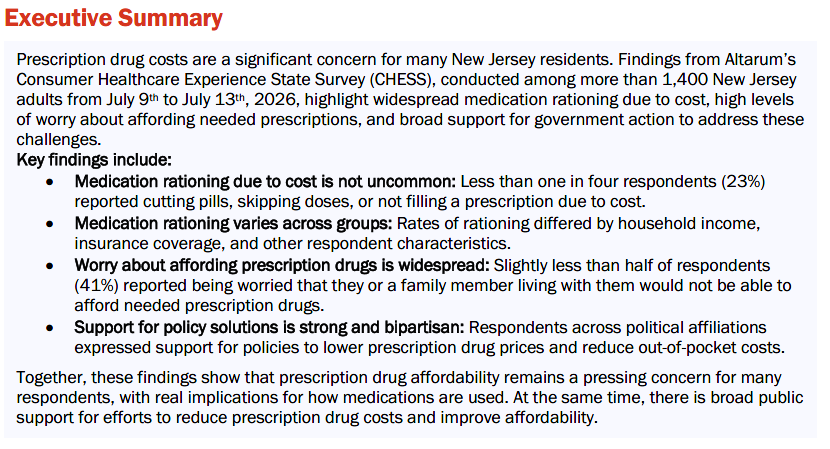
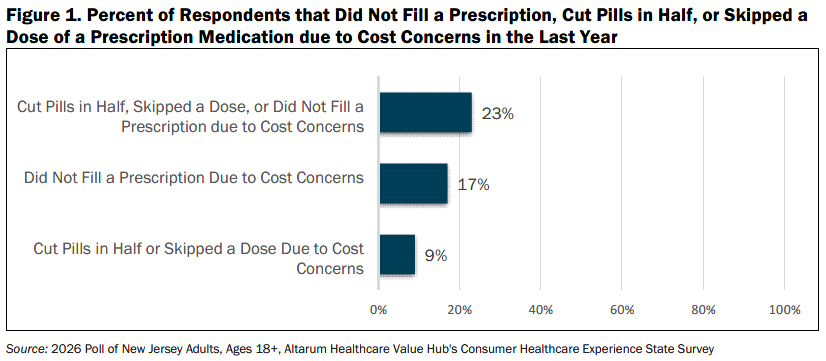
Less than one in four respondents (23%) reported rationing medication due to cost concerns in the last year, 9% reported cutting pills in half or skipping a dose, and 17% reported not filling a prescription due to cost concerns (Figure 1).
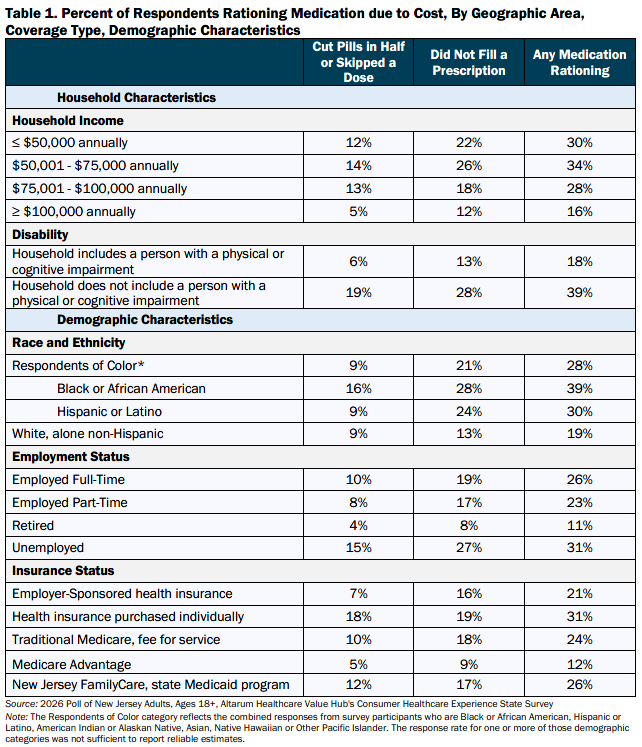
Medication rationing varies across respondent groups in New Jersey (Table 1). Differences were observed by household income, insurance coverage type, and other respondent characteristics, underscoring that cost-related barriers to obtaining prescription drugs affects multiple populations. National evidence similarly indicates that medication rationing and access barriers persist across income and insurance status, including among insured individuals.[i]
While some patients may attempt to manage high drug costs through secondary coverage, paying out-of-pocket, or manufacturer coupons, these approaches are not sufficient for many. Slightly less than half (41%) of survey respondents reported being somewhat or very worried that they or a family member living with them would not be able to afford the prescription drugs they need. This helps explain why 26% of survey respondents identified reducing out-of-pocket prescription drugs costs as a priority for government action.

Respondent Perceptions of Health Care Systems, Policy Solutions
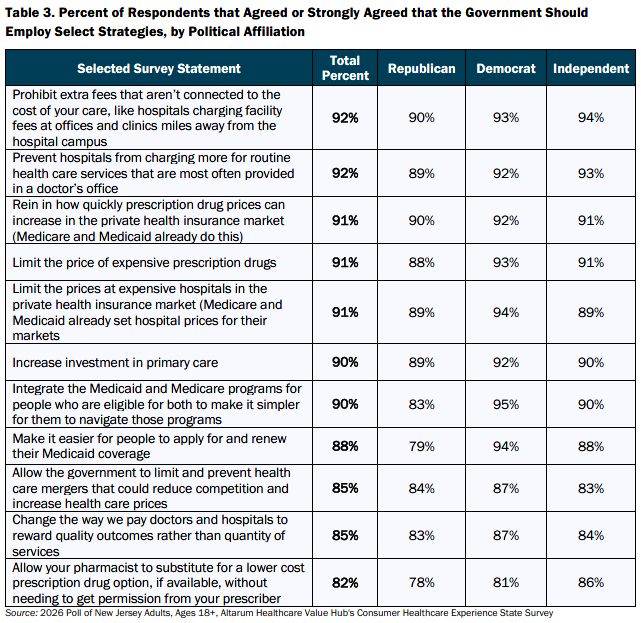
New Jersey respondents most often identified drug companies as a driver of rising health care costs (70%). Support for action was even stronger: 91% of respondents favored policies to reduce prescription drug prices, and 91% supported efforts to limit prescription drug price increases. These findings suggest that prescription drug affordability is a common concern among respondents and support to address issues cuts across political affiliation, demonstrating broad, bipartisan agreement that policymakers should take meaningful steps to make prescription drugs more affordable (Table 3).
Conclusion
Findings from the New Jersey Consumer Healthcare Experience State Survey show that prescription drug costs remain a significant concern for many respondents. More than one in four respondents reported rationing medications due to cost, and more than half reported worry about being able to afford the prescription drugs they or a family member living with them need. Together, these findings highlight the financial pressures associated with prescription drug costs and the ways these pressures can affect how people use needed medications.
At the same time, respondents across political affiliations express strong support for policy approaches aimed at lowering prescription drug prices and reducing out‑of‑pocket costs. Ongoing, state‑level survey data can help policymakers, advocates, and other stakeholders track trends in prescription drug affordability over time and assess whether efforts to address these concerns are improving patients’ experiences.
For more detailed information about health care affordability burdens facing New Jersey respondents, please see Healthcare Value Hub, New Jersey Residents Struggle to Afford High Health Care Costs; Worry About Affording Health Care in the Future; Support Government Action across Party Lines, Data Brief (October 2026).
Altarum in Action
Rhode Island Office of the Health Insurance Commissioner cites CHESS survey in letter to State House Committee on Health and Human Services about HB072 related to reimbursement rates and repealing affordability standards. Read more
Washington State Senator Patty Murray’s office cites the WA CHESS survey in press release about Senate Health, Education, Labor and Pensions (HELP) Committee hearing where Senator Murray questioned CEOs of major pharmaceutical companies about the high prices charged to Americans for their prescription drugs. Read more
Read More Altarum in Action Resources